A Pesticide Passes Every Safety Test—Then Silently Shuts Down Bee Reproduction
New gene-level evidence shows sulfoxaflor may be suppressing bumblebee fertility in ways the tests used to approve it were never designed to catch.
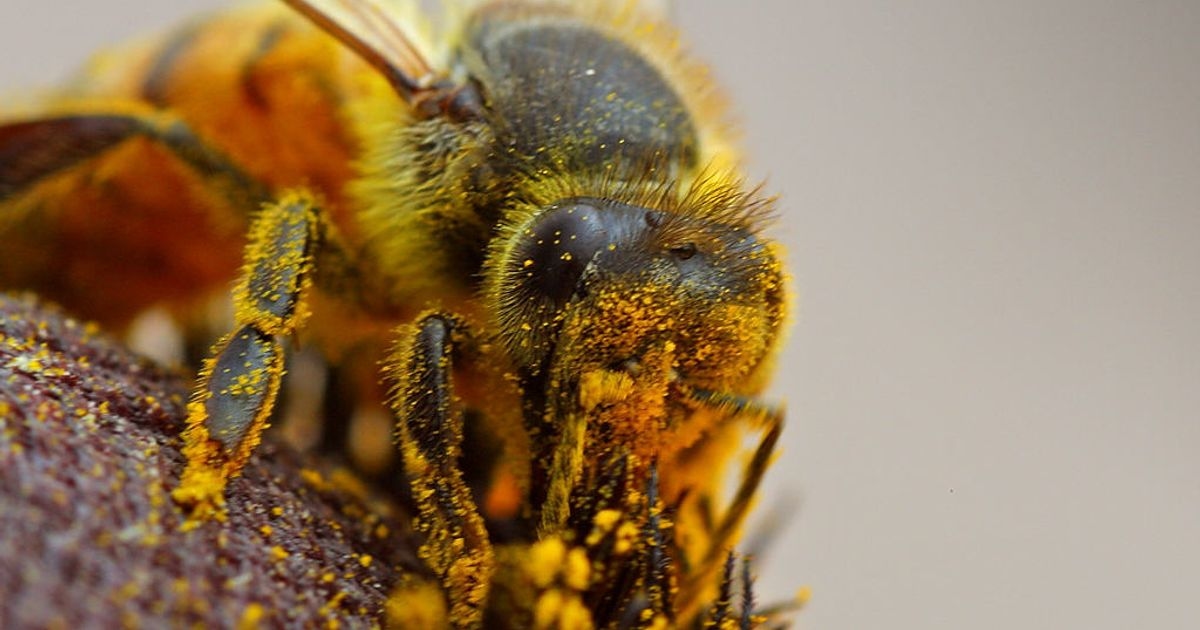
Photo: Jon Sullivan / PD Photo.org
For years, regulators have judged pesticide safety largely by one question: does it kill bees outright? A new study suggests that's the wrong question—and the answer has been hiding in plain sight for a chemical already sprayed across more than 200 million American acres.
The pesticide is sulfoxaflor, marketed as a "bee-safer" alternative to older neonicotinoids because it doesn't cause the mass die-offs those chemicals are known for. Researchers at the Georgia Institute of Technology, in a study funded by the U.S. Department of Agriculture, wanted to look past survival and into the bees' cells themselves.
They exposed worker bumblebees (Bombus impatiens) to low, field-realistic doses of sulfoxaflor, then flash-froze tissue samples and analyzed RNA to see which genes switched on or off. Using computational modeling to map the affected biological pathways, they found the largest disruptions clustered in one place: ovarian tissue. The study, published in Ecotoxicology and Environmental Safety and highlighted this month by ScienceDaily, points to a pesticide quietly interfering with the molecular machinery of reproduction—without ever triggering a visible kill event.
That distinction matters enormously. As TechTimes reported, current pesticide safety testing is built around acute toxicity: does exposure kill the bee, and how quickly? It's a blunt instrument, well-suited to catching chemicals that cause immediate collapse, and poorly suited to catching one that suppresses egg-laying or nest-building months down the line. A colony that looks intact on a field survey could still be failing to reproduce.
NaturalNews's coverage of the same research underscores why this is more than an academic curiosity. Bumblebees are wild, unmanaged pollinators—there's no beekeeper monitoring hive health or supplementing lost colonies. If sulfoxaflor is dragging down wild bumblebee fertility at scale, the effect could compound quietly across seasons, showing up as regional population decline long after the causal link has become difficult to trace.
The stakes go well beyond one insect or one chemical. Pollinators contribute to roughly one-third of global food production, and regulators worldwide have leaned on frameworks like this one to approve replacements for banned neonicotinoids. If those frameworks are systematically blind to reproductive-level harm, it raises uncomfortable questions about every "safer alternative" pesticide currently in circulation—not because scientists were careless, but because the tools they were using weren't built to see this kind of damage in the first place.
There's no indication yet that regulators are moving to change testing protocols, and that's the real work ahead: pairing gene-expression screening with the acute-toxicity tests that already exist, so subtler harms don't slip through for another generation of chemicals.
In the meantime, growers who depend on pollination aren't waiting for regulatory reform to catch up with the science—some are hedging with additional pollination capacity that doesn't rely on a single insect species surviving a single chemical exposure.
Innovation Spotlight: One example is BloomX, whose YAHAV 2400 platform uses electrostatic pollen collection and an AI-scheduled app to mechanically pollinate blueberry and avocado orchards. The system is designed to work in weather and timing windows—like cold mornings or brief bloom peaks—that managed bee colonies often miss, offering growers a supplementary layer of pollination reliability that doesn't hinge on any single pollinator population staying healthy.
SOURCES
- Study: Sulfoxaflor Exposure Alters Gene Activity in Bumblebee Ovaries, Raising Reproduction Concerns – NaturalNews.com
- Study: Sulfoxaflor Exposure Alters Gene Activity in Bumblebee Ovaries, Raising Reproduction Concerns – NaturalNews.com
- Study: Sulfoxaflor Exposure Alters Gene Activity in Bumblebee Ovaries, Raising Reproduction Concerns – NaturalNews.com
- Sulfoxaflor Disrupts Bumblebee Reproduction at Gene Level, Bypassing Safety Tests
- Sulfoxaflor Disrupts Bumblebee Reproduction at Gene Level, Bypassing Safety Tests
- This common pesticide may be quietly wiping out future bumblebees | ScienceDaily