Beekeepers Lost 40% of Their Colonies Last Year. That Counts as an Improvement.
The 2025-26 U.S. Beekeeping Survey shows losses easing off two years of record die-offs, but 39.9% is still nearly triple what the industry can absorb long-term.
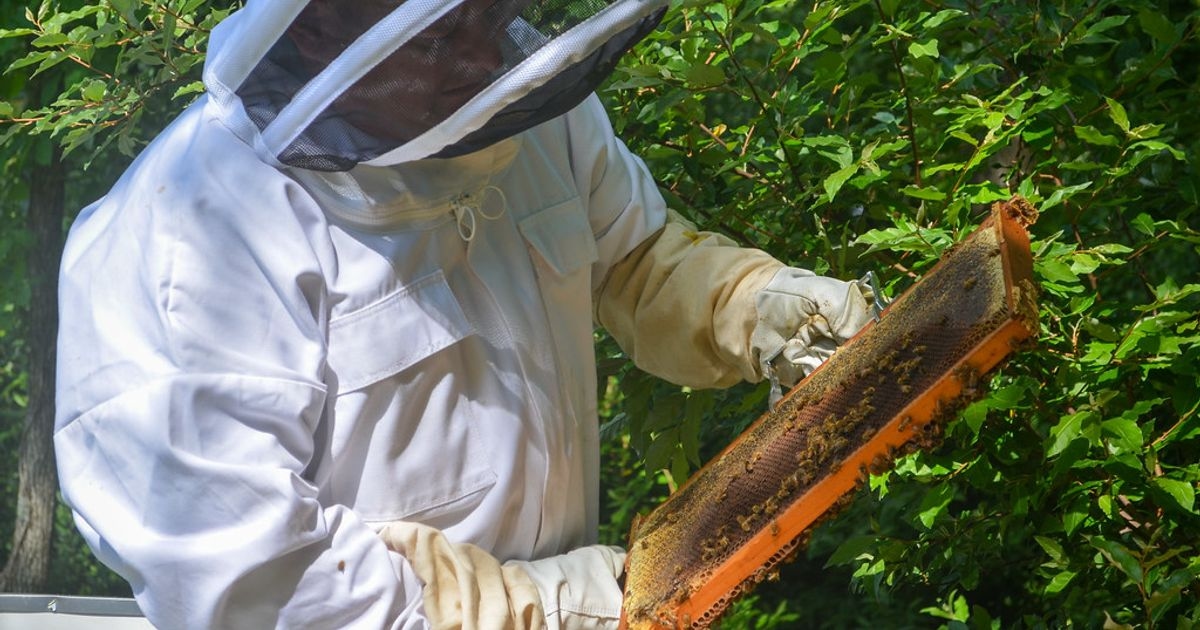
Photo: LouisvilleUSACE / Openverse
Auburn University released its annual colony loss numbers in June, and the headline figure is 39.9% — the share of managed honey bee colonies that died between April 2025 and April 2026, according to the U.S. Beekeeping Survey. Compared to the prior two years, that's an improvement: colonies fell 55.1% in 2023-24 and 55.6% in 2024-25, losses so steep that some commercial operations spent last spring rebuilding hives from scratch just to fill almond pollination contracts.
Industry leaders aren't calling this a turnaround. "Our industry and the crops that depend on it cannot sustain these levels of losses year after year," one beekeeping representative said in the Auburn release. "We need real action now before our industry reaches a point of no return. We must continue to invest in research, support, and solutions that get these numbers down closer to the truly acceptable level of 15-20%." That's the gap that matters here — not 40% versus 55%, but 40% versus the 15-20% range that's actually sustainable for an industry that rents out hives every spring and rebuilds losses every winter.
The driver, as it has been for two decades, is Varroa destructor, the parasitic mite that vectors bee viruses and has developed resistance to several classes of miticides. USDA survey data show 21.8% of colonies affected by varroa in the first quarter of 2026 and 26.3% in the second, per the National Agricultural Statistics Service report. There was a smaller bright spot buried in the numbers: colonies lost to Colony Collapse Disorder symptoms on operations with five or more hives totaled 93,770 in the first quarter of 2026, down 18% from the same period a year earlier. CCD, the mysterious mass-abandonment syndrome that first got attention in 2006, has become a minor character in this story compared to varroa and its associated viruses.
Against that backdrop, USDA's Plant Protection and Quarantine program put out a statement on August 10 saying it's working with state partners to protect bees and other pollinators, part of a broader push the agency has framed around "reversing pollinator decline to feed the future." The announcement is light on new funding specifics or timelines. What it mostly signals is that the federal government now treats pollinator health as a supply-chain issue rather than a conservation side project — which tracks with the economics. Wild and managed bees add an estimated $15 billion in crop value annually in the U.S., and honey bees alone pollinate more than 100 fruit, nut, and vegetable crops plus over 40 seed crops, according to USDA's own accounting of pollinator importance. Almonds alone depend on honey bees almost entirely, and California growers have already had rough springs finding enough healthy hives to rent.
A companion analysis, a beekeeper triage survey posted to bioRxiv in August, digs into what commercial operators actually did in response to the 2024-25 losses — splitting surviving colonies aggressively, buying in packages and queens, shifting miticide rotations. The paper reads less like a research breakthrough and more like a field diary of an industry running triage every winter instead of planning for growth.
None of this changes the basic math beekeepers are working with. Losing 40% of your hives every year means most of a beekeeping operation's labor and capital goes into replacement, not expansion, and there's no version of "acceptable" in that range that lets small and mid-size operations plan more than a season ahead. The USDA's PPQ involvement is real, but it's coordination and monitoring, not a mite treatment breakthrough or a funding infusion large enough to change the trendline on its own.
Innovation Spotlight: BloomX While the industry works on keeping bees alive, some growers are hedging by pollinating without them, at least in some windows. BloomX makes the YAHAV 2400, a mechanical pollination platform that uses electrostatic pollen collection paired with an AI-scheduled app to hit blueberry and avocado blocks during weather or timing windows when managed bee activity drops off — cold mornings, rain-shortened bloom, orchard blocks bees tend to skip. It's not a replacement for a healthy hive count, but it's one of a growing number of tools aimed at buying growers a hedge against exactly the kind of colony volatility Auburn's survey just quantified. More at bloomx.ag.
SOURCES
- The Importance of Pollinators | USDA
- Honey bee colony losses stabilize following record highs, yet pressures persist
- Reversing Pollinator Decline is Key to Feeding the Future | USDA
- Insights from U.S. beekeeper triage surveys following unusually high honey bee colony losses 2024-2025
- Insights from U.S. beekeeper triage surveys following unusually high honey bee colony losses 2024–2025 - ScienceDirect
- Honey Bee Colonies 08/03/2026