
Low Doses of a Common Pesticide Leave Bumblebees Alive but Reproductively Damaged
A Georgia Tech study finds that sulfoxaflor, sprayed on more than 200 million U.S. acres, alters gene expression in bumblebee ovaries at exposure levels regulators consider safe.
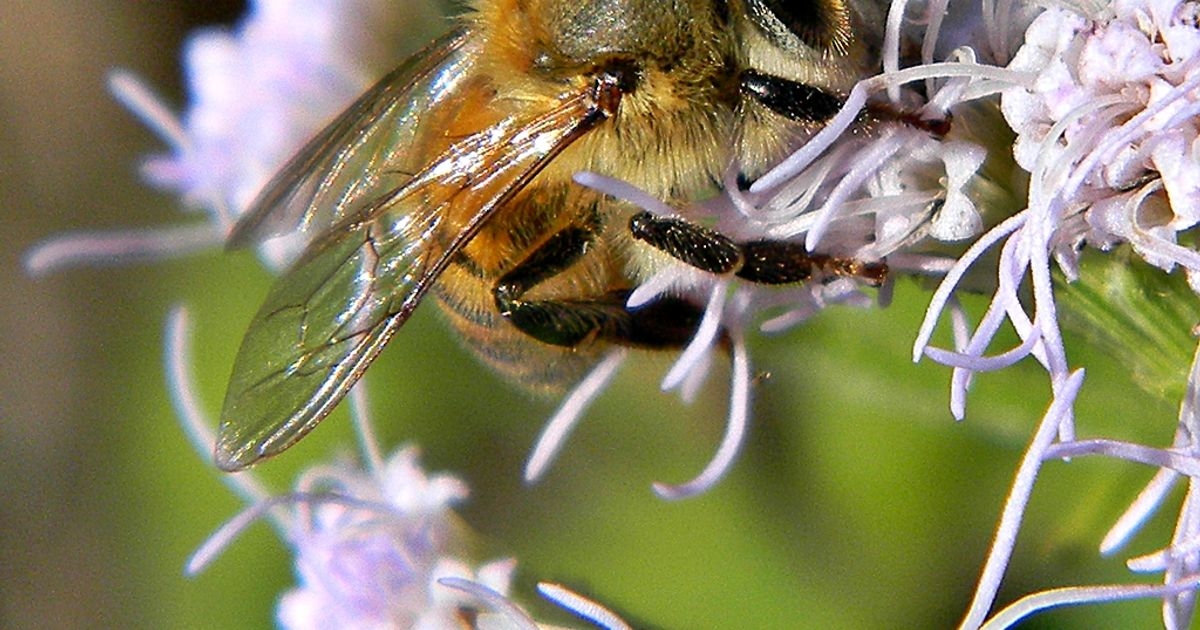
Photo: bob in swamp / Openverse
For 21 days, researchers at Georgia Tech fed common eastern bumblebees sublethal doses of sulfoxaflor, then checked whether the bees were still alive. Mostly, they were. Survival rates in the treated group looked close to the untreated colonies, the kind of result that, on a standard toxicology form, gets a pesticide waved through.
Then the researchers looked at the ovaries.
The study, published in Ecotoxicology and Environmental Safety and highlighted by Georgia Tech's Research News Center, found that sulfoxaflor exposure altered gene expression in bumblebee ovarian tissue even at doses that didn't kill the bees outright. Worker egg-laying dropped. Ovarian development was suppressed. Feeding behavior shifted, and in microcolonies, nest construction fell apart. The bees looked fine walking around. Whatever machinery drives egg production and colony growth had already been thrown off.
That gap matters because it's exactly the gap that pesticide approval processes tend to miss. Regulatory testing for bee safety has long leaned on mortality and acute toxicity, does the bee die, how fast, at what concentration. Sulfoxaflor was built to clear that bar. It's a next-generation compound, introduced in 2013 specifically as an alternative to neonicotinoids, the pesticide class Europe restricted after mounting evidence of bee harm. Sulfoxaflor works differently at the molecular level and was marketed, in part, on the promise that it wouldn't carry the same baggage.
It's now registered for use on more than 200 million acres in the U.S., mostly to control aphids and other sap-feeding insects in soybeans, corn, and other row crops. The USDA-funded Georgia Tech team wanted to know what was happening below the survival threshold, in gene expression, in reproductive tissue, in the slower mechanics of colony decline that don't show up in a two-week mortality test.
The EPA's own 2022 biological evaluation of sulfoxaflor had already flagged the compound as a risk to pollinators, estimating that it potentially threatens 24 insect species with extinction and jeopardizes 94 plant species that depend on insect pollination. That evaluation was based largely on exposure modeling and toxicity data. The new study adds a mechanism: gene-level disruption in reproductive tissue that doesn't require a lethal dose to matter.
For a bumblebee colony, suppressed egg-laying is not a cosmetic problem. Fewer eggs means fewer workers the following season, which means fewer foragers, which means a weaker nest heading into winter. Colonies don't need to be poisoned outright to fail. They can simply produce less, generation over generation, until the population thins out. That's a harder signal to catch in a regulatory framework built around body counts.
The researchers aren't arguing sulfoxaflor should be banned tomorrow, and the paper doesn't wade into policy. What it does is narrow, specific, and hard to wave away: a widely used pesticide, applied at label-consistent low doses, changes reproductive gene expression in a major North American pollinator species. Whether that finding moves the needle on how the EPA or other regulators evaluate sublethal risk is an open question, and one that will likely take years and more studies to settle.
Innovation Spotlight: BloomX
While the sulfoxaflor findings point to hidden costs in chemical pest management, some growers are hedging against bee-dependent pollination altogether. BloomX builds the YAHAV 2400, a mechanical pollination platform that uses electrostatic pollen collection to pollinate blueberry and avocado blocks on a schedule set by an AI-driven app, timed to bloom windows and weather conditions that managed honeybee hives often miss. It's not a fix for pesticide exposure in wild bumblebee populations, but it's a sign of where growers are looking as questions about pollinator reliability keep piling up.
SOURCES
- Study: Sulfoxaflor Exposure Alters Gene Activity in Bumblebee Ovaries, Raising Reproduction Concerns – NaturalNews.com
- Bumblebees survived low doses of a modern pesticide, but scientists found the real damage hidden in genes linked to the next generation – ECOticias.com
- Integrative assessment of sulfoxaflor effects on gene expression, reproduction, and behavior in the bumblebee Bombus impatiens - ScienceDirect
- Next-Generation Pesticide Disrupts Bumblebee Reproduction | Research News Center
- Sulfoxaflor Disrupts Bumblebee Reproduction at Gene Level, Bypassing Safety Tests