The Bees Are Showing Up Late — And Crops Can't Wait
As warming temperatures scramble the timing between flowering and pollinator emergence, growers are turning to artificial and robotic pollination to close the gap nature no longer can.
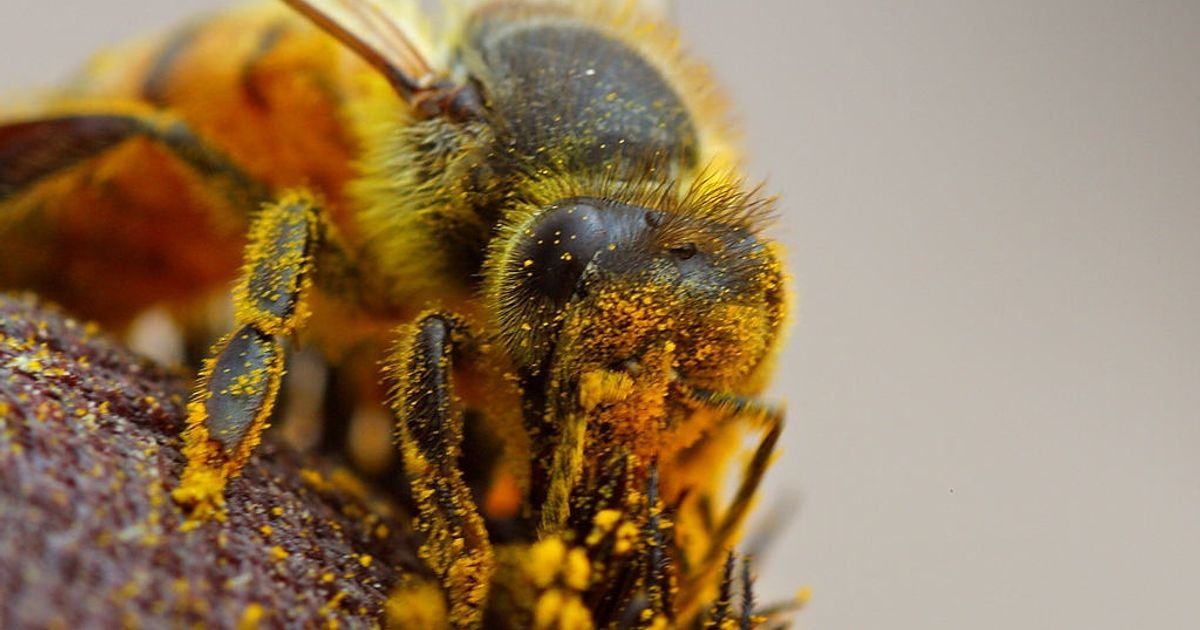
Photo: Jon Sullivan / PD Photo.org
For millions of years, flowers and their pollinators kept the same clock. Warm spring days told an orchid it was time to bloom; the same warmth told a bee it was time to emerge. That synchrony is breaking down — and it's happening faster than most of us realized.
A widening gap
Plants and pollinators don't read temperature the same way. Many flowers respond directly to warmth, shifting bloom dates earlier as spring heats up. Pollinators often rely on a mix of cues — temperature, day length, soil conditions — and don't always shift at the same pace. The result is a growing asymmetry between when flowers open and when their pollinators arrive, according to a review in Integrative and Comparative Biology.
The numbers illustrate how uneven this drift can be. One European orchid advances its flowering by six days for every 1°C of spring warming — but its male bee pollinator emerges nine days earlier, and females a full 15 days earlier, per Climate Central's reporting. In Colorado, glacier lilies are now blooming so early that they risk flowering before bumble bee queens even leave hibernation, breaking a pollination relationship that plant and insect have relied on for generations.
This isn't a fringe phenomenon. Simulations cited in recent research suggest that 17 to 50% of all pollinator species may already be experiencing reduced access to floral resources because of this kind of timing mismatch.
Why your grocery bill should care
This isn't just an ecological curiosity — it's showing up in orchards. The USDA's Northwest Climate Hub reports that specialty crops like apples and other tree fruit are flowering earlier as spring temperatures rise, often outpacing the emergence of the wild bees that pollinate them. When bloom and bee miss each other, pollination is incomplete — and that translates directly into lower yields and poorer fruit quality, the exact outcomes farmers and consumers feel at harvest and at checkout, as Yale Climate Connections has detailed in almond and other tree-fruit systems.
There is a sliver of good news: some native bee populations show real phenological flexibility, adjusting their emergence timing enough to maintain critical pollination relationships, per long-term bee emergence monitoring. Adaptation is happening. The open question — one researchers admit remains rather unexplored — is whether it's happening fast enough, and for enough species, to keep pace with the crops and ecosystems that depend on them.
Building a backup system
Growers aren't waiting to find out. A wave of agtech companies is building tools that decouple pollination from the increasingly unpredictable timing of natural bee activity.
Israeli startup Edete has built an artificial pollination service that sidesteps the synchronization problem entirely — pollen can be collected and preserved years in advance, then mechanically dispersed exactly when flowers open, according to Startups Magazine. The company, which built its business on insect-pollinated crops like almonds, is now expanding to wind-pollinated pistachios, where insufficient winter chill increasingly causes male and female trees to bloom out of sync.
Elsewhere, researchers are exploring how robotics and real-time environmental monitoring could eventually let pollination systems respond to bloom conditions as they happen, rather than on a fixed seasonal schedule — a kind of pollination that adapts as fast as the climate does.
None of this replaces wild bees, and no one in this space claims it should. But as mismatch windows widen in orchards and fields worldwide, these mechanical and logistical backstops are becoming a genuine second layer of food security — insurance for the moments when nature's timing no longer lines up.
Innovation Spotlight: BloomX
BloomX, an Israeli agtech company, builds the YAHAV 2400, a mechanical pollination platform that uses electrostatic pollen collection paired with an AI-scheduled app to pollinate blueberry and avocado orchards. The system is designed to operate in the exact weather and timing windows that managed honeybee hives often miss — offering growers a precise, on-demand complement to pollination services when natural timing falls short. More at bloomx.ag.
SOURCES
- Plant–pollinator interactions under climate change: The use of spatial and temporal transplants - PMC
- Climate Change Disrupts Bee’s Pollination of Flowers | Climate Central
- Climate Change and Bumble Bees Further reading on bumble bees and
- Complexities of Phenological Shifts for Plant–Pollinator Interactions and Ways Forward - PMC
- Complexities of Phenological Shifts for Plant–Pollinator Interactions and Ways Forward | Integrative and Comparative Biology | Oxford Academic
- The effects of climate change on boreal plant-pollinator interactions are largely neglected by science - ScienceDirect
- Generalized plant–pollinator phenological climate‐driven advances still lead to a decline in phenological overlap
- Northwest Pollinators and Climate Change | USDA Climate Hubs
- Climate change may lead to a timing mismatch between wild bees and fruit trees » Yale Climate Connections
- Agtech startupexpands its artificial pollination services to wind-pollinated crops | Startups Magazine
- Pollination Service - Edete Precision Pollination Technology for Agriculture
- BloomX Tackles Pollination Challenges with Precision Bio-Mimicking Technology
- A comprehensive review of autonomous flower pollination techniques: Progress, challenges, and future directions - ScienceDirect
- Global Warming, Advancing Bloom and Evidence for Pollinator Plasticity from Long-Term Bee Emergence Monitoring