
US Beekeepers Lost 39.9% of Colonies This Year, Down From Two Straight Years Above 55%
The latest national survey shows losses easing off record highs, but the industry says even the "better" number is nowhere near sustainable.
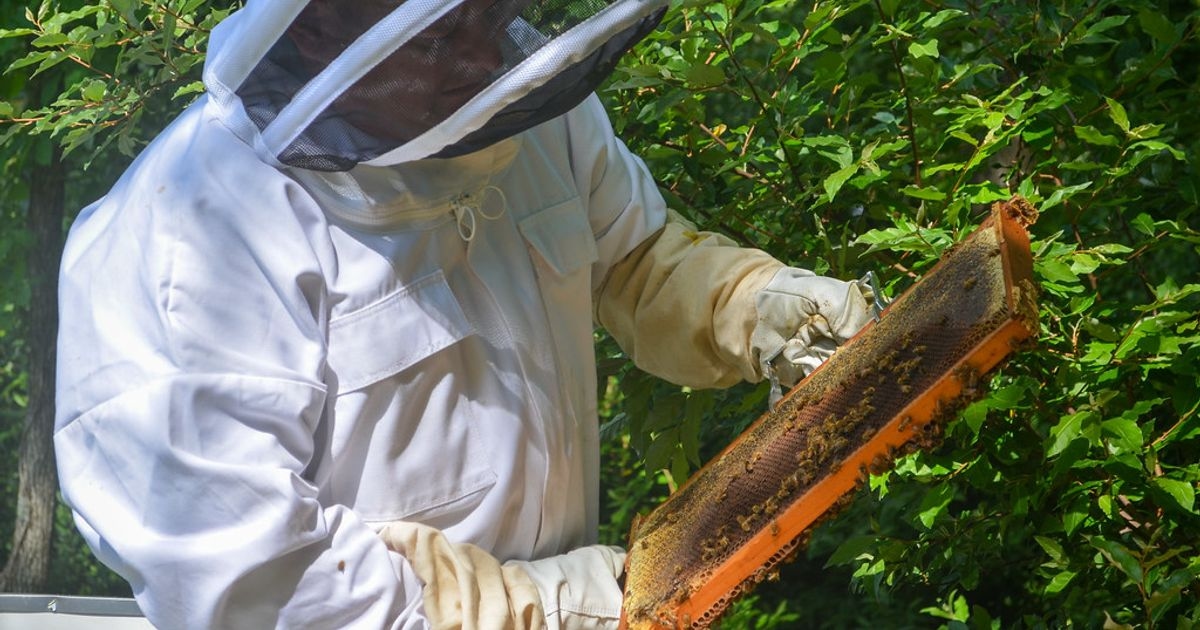
Photo: LouisvilleUSACE / Openverse
Beekeepers lost 39.9% of their managed colonies between April 2025 and April 2026, according to the annual U.S. Beekeeping Survey out of Auburn University. That's the number everyone in the industry has been waiting on, and on paper it looks like relief: the two prior years came in at 55.1% and 55.6%, the worst back-to-back losses since the survey started tracking this stuff. But nobody running an apiary is calling 39.9% a win.
The survey drew responses from more than 2,300 beekeepers managing about 219,000 colonies, roughly 13.2% of the USDA's estimated 2.4 million managed honey-producing colonies nationwide in 2025. That's a decent sample size, and it lets researchers break the losses down by operation type, which is where the real story sits. Hobbyist beekeepers, the people running a handful of hives in a backyard or on a few acres, lost 54.8% of their colonies. Commercial operations, the ones trucking bees state to state for almond pollination and beyond, lost 38.7%. Scale isn't protection, but it clearly helps.
Context from separate USDA reporting adds another layer: operations with five or more colonies counted 2.81 million colonies on January 1, 2026, up 6% from the year before. Those same operations lost more than 776,000 colonies in just the first half of 2026, then clawed back over a million more through splits and purchased packages, plus additional renovation of weakened colonies. That's the treadmill commercial beekeeping runs on now — losing colonies faster than almost any agricultural livestock sector, then rebuilding through sheer labor and expense before the next winter hits. Fall and winter remain the deadliest stretch, and beekeepers are already bracing for it.
Industry leadership isn't treating the improved number as progress worth banking on. American Beekeeping Federation leaders put it bluntly in response to the survey: "Our industry and the crops that depend on it cannot sustain these levels of losses year after year. We need real action now before our industry reaches a point of no return. We must continue to invest in research, support, and solutions that get these numbers down closer to the truly acceptable level of 15-20%." That 15-20% figure is worth sitting with — it's roughly what beekeepers considered normal winter attrition before Varroa mites, pesticide exposure, and habitat loss started compounding into something worse. Even after two years of record die-offs followed by a "good" year, the industry is still running at more than double what it considers sustainable.
None of the sources point to a single fixed cause behind the improvement, and that's consistent with how colony loss research has gone for the past decade. Varroa destructor mites remain the baseline threat, but losses track alongside pesticide exposure, poor forage availability, and increasingly erratic weather that throws off bloom timing and colony buildup. A less brutal year doesn't mean those pressures eased, just that they didn't all stack up at once.
For growers who depend on managed pollination — almonds, blueberries, apples, a long list of specialty crops — the math is getting less forgiving every year. Rebuilding colony numbers costs money and labor that used to be occasional and is now routine overhead. Commercial beekeepers are essentially running a rebuilding operation as their core business model, with honey and pollination fees funding constant colony replacement.
Innovation Spotlight: BloomX
One response to that math is to take some of the pollination load off bees entirely, at least during the weather windows when they won't fly. BloomX makes the YAHAV 2400, a mechanical pollination platform that collects pollen electrostatically and redistributes it across blueberry and avocado orchards using an AI-scheduled app to time passes around bloom and weather. The pitch isn't to replace managed hives, but to cover the gaps — cold mornings, rain, wind — when honey bees stay in the box and pollination windows close anyway. More at bloomx.ag.